

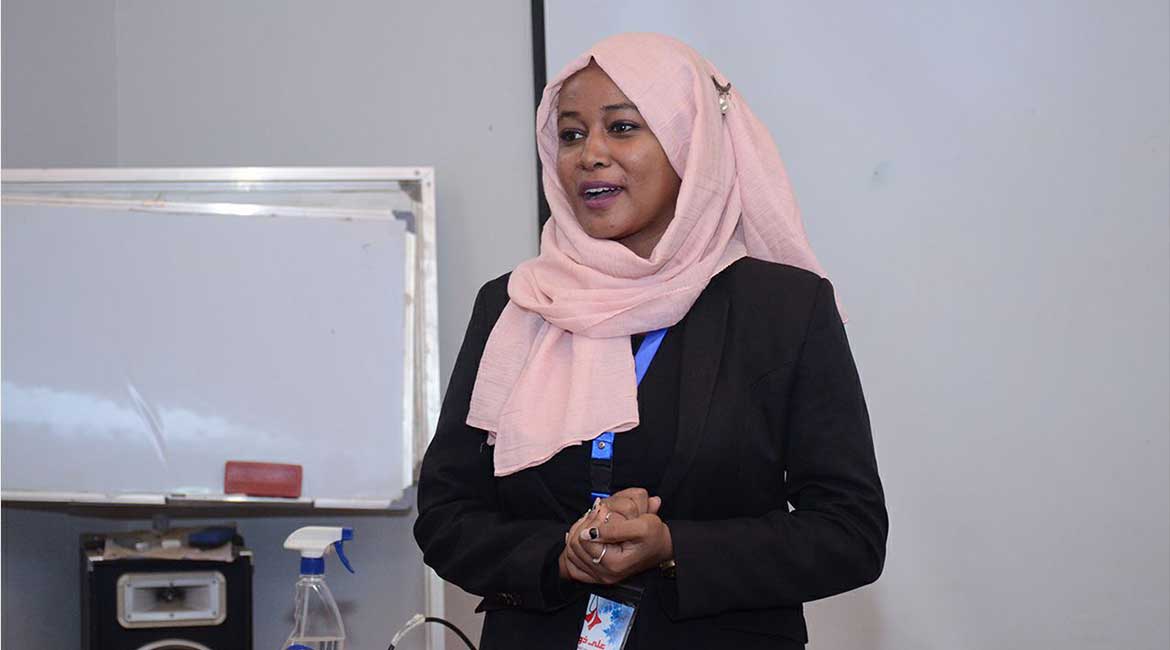

In a country grappling with a multitude of challenges – from political instability to economic crises – one of the most critical yet overlooked avenues to progress is the economic empowerment of Sudanese women. Despite making up half the population, Sudanese women face immense barriers to fully participating in and benefiting from the nation’s economic activities.
Deeply rooted cultural norms, discriminatory laws, and limited access to education, healthcare, and financial services have long constrained Sudanese women’s economic prospects. Many are relegated to informal, low-paid work or denied the right to own property, open a bank account, or make independent financial decisions.
“The economic marginalization of women is a key reason why Sudan lags behind its peers on crucial development indicators,” explains an expert. “When women are excluded from the economy, the whole of society suffers.”
Yet there are signs of progress. In recent years, a growing number of Sudanese women have started their own small businesses, leveraging digital technologies and accessing microfinance to overcome traditional barriers. Organizations are also advocating for legal reforms to enshrine women’s economic rights.
“We are seeing more Sudanese women overcome the odds and succeed as entrepreneurs, farmers, and professionals,” says a business owner in Khartoum. “But there is still an immense amount of work to be done to create a truly level playing field.”
Realizing the full economic potential of Sudanese women will require a multi-pronged approach. Investments in girls’ education, skills training, and access to finance must be coupled with the repeal of discriminatory laws and the promotion of female leadership in the public and private sectors.
“When Sudanese women are empowered economically, everyone benefits – families, communities, and the nation as a whole,” affirms an expert. “It is time for Sudan to unlock this vast, untapped resource for the good of the country’s future.”
With the right policies, programs, and mindset shift, Sudanese women can become catalysts for economic transformation, driving progress and prosperity in their communities and country. The path forward may be long, but the destination of a more equitable, prosperous Sudan is well worth the journey.
The passage discusses the efforts of pioneer of Feed, a women’s empowerment initiative in Sudan, to support the competitiveness of the Sudanese economy and increase its openness to new technologies and activities. They aim to address women’s unemployment and provide financing for high-quality investment and production projects that can be exported to bring in foreign currency.
However, the story may not be as positive as some think, due to the low standard of living and high poverty and unemployment rates among women in Sudan. Official data shows women make up 45% of Sudan’s population of over 42 million.
To enhance women’s participation, pioneer of Feed is launching a project called “Intaji” to provide microfinance opportunities for women engaged in agriculture, in an effort to alleviate women’s unemployment.
The key statistics mentioned are:
– 48% unemployment rate among Sudanese women out of a population of 42 million
– Overall unemployment rate in Sudan is around 19%, reaching 34% among youth and 48% among women
Experts believe that reducing women’s unemployment and increasing their participation in development is primarily tied to removing barriers to their entry into the labor market, which could achieve significant gains by expanding the chronically crisis-ridden economic activity. They emphasize that employment and economic participation are an empowering force for women, and gender equality in opportunities leads to a more equitable society and higher labor productivity.
Reducing unemployment rates among Sudanese women and increasing their participation in development are essentially linked to dismantling the obstacles to their entry into the labor market.
In a country where the population is young, with 60% under the age of 25, the low participation of women in the labor force or their lack of job opportunities is a concern because it has implications that go beyond the lack of income-generating activities, affecting the social and economic fabric.
Statistics indicate that the labor force participation rate in the country does not exceed half of those between the ages of 15 and 64, which is lower than the prevailing rates in many other African countries facing the same problems.
In urban areas, youth unemployment rates reach 40%, and these rates are even higher among young women, as women face severe marginalization in the labor market in general.
According to indicators monitored by the World Bank, nearly half of the unemployed Sudanese are under the age of 25, and women make up the largest proportion of them, with Sudanese women having a 55% lower likelihood of employment compared to older women.
Males, regardless of their age, geographic location, or educational level, have better job opportunities than females.
Sudanese women enjoy less than a third of the legal rights that men enjoy in key areas related to the ability to benefit from economic opportunities, placing Sudan near the bottom of the 2021 “Women, Business and the Law” report globally.
There is increasing pressure to adopt effective mechanisms to support the empowerment of Sudanese women in building the economy.
However, women in Sudan generally face many constraints that go beyond the legal framework and social norms. Perhaps the most prominent of these obstacles is the ability to access finance and decision-making power.
For example, the percentage of companies chaired by women does not exceed 3%, while the entities where women are among the original owners do not exceed around 8%.
The Sudanese authorities have turned their attention to studying the possibility of expanding the use of microfinance to address high unemployment rates, especially in rural areas, amid the paralysis of reform plans due to the current political impasse.
The central bank’s plan for 2022, announced last January, included a microfinance sector plan that extends until 2025, which is contingent on several determinants for success, especially the banking sector and other financing institutions’ understanding of the importance of this aspect for economic development.
In summary, while the potential annual employment opportunities range from around 25,000 to 50,000 jobs, economic circles see them as modest and disproportionate, especially when compared to the number of graduates. In a positive development, the women’s organization Pioneer of Feed has stepped up to forge strategic partnerships with several banks, including Savings Bank and Export Development Bank, to provide financing for productive projects. These initiatives aim to unlock the economic potential of Sudanese women and set the wheels of the economy in motion. By leveraging these collaborative efforts between the public and private sectors, women entrepreneurs can now access the necessary resources and support to build successful businesses. Through this multi-stakeholder approach, Pioneer of Feed is poised to play a pivotal role in empowering Sudanese women and driving the country’s overall economic progress. With the right financing mechanisms and institutional support in place, the goal of enhancing women’s participation in the economy and decision-making processes can be steadily realized.